Portrait libraryVelrath Ilmraen
Dhampir / Fighter
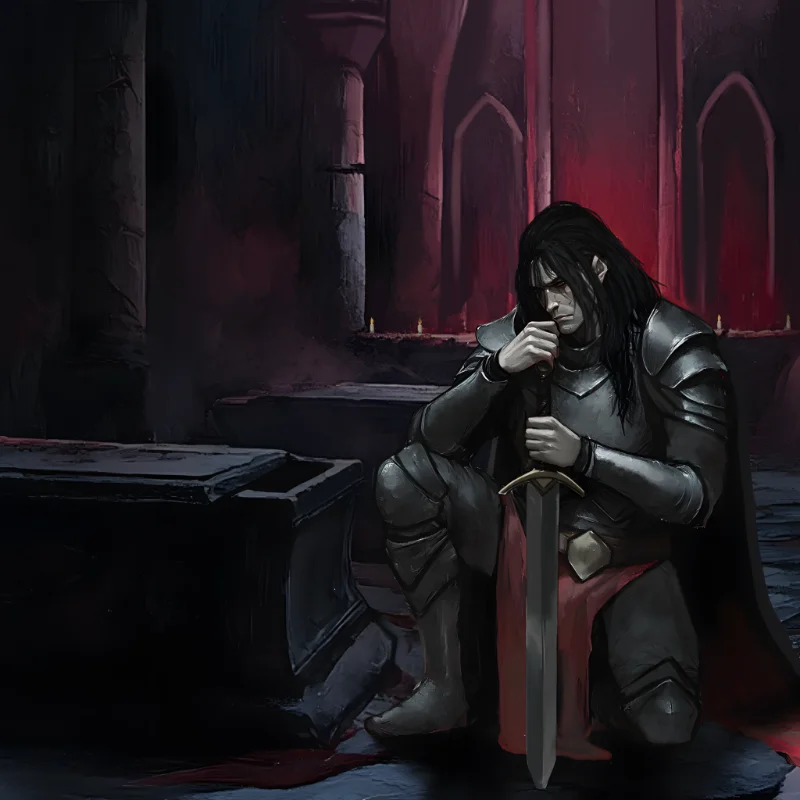
Submitted character story
Velrath Ilmraen was born to a fading Dambrathan bloodline old enough to remember honor, but too ruined to command it. The Ilmraen name still opened a few doors in Cathyr, though never the best ones, and Velrath grew up understanding that he was not being raised as an heir. He was the last useful son: a quiet half-elven swordhand trained to guard, obey, and bleed with dignity.

His family taught him steel first, manners second, and magic only in the narrow, practical way their house still understood it. A ward traced along a blade. A whisper of shadow to mislead an enemy’s eye. A cold focus before the killing stroke. Velrath was never a great mage, nor a courtly prodigy. He was disciplined, watchful, and painfully aware that usefulness was the closest thing to affection his house had left to give.

His fall began during a winter feast in Cathyr, when Lady Maerovra Vaul noticed him.

She was pale, elegant, and patient in a way living nobles rarely are. She did not threaten him or drag him into some crypt by force. Instead she offered what Velrath had been taught to want: patronage, rank, purpose, and the chance to make the Ilmraen name matter again. Maerovra praised his restraint. She admired his loneliness without mocking it. She spoke to him as if he were not merely the last piece of a broken house, but the beginning of something sharper.

By the time Velrath understood what she was, he had already invited her too far in.

Maerovra fed from him over many nights, always gently at first, leaving him weaker, colder, and more dependent on the approval she gave so freely afterward. She called it a gift. She told him he was being remade into her black-armored champion: a blade between the living courts of Dambrath and the dead courts beneath them. Velrath wanted to hate her. Some nights, he did. Other nights, shamefully, he believed her.

The final rite was never completed.

Something went wrong in the lower crypts of House Vaul. Velrath remembers fire, screaming servants, the taste of blood that was not his, and Maerovra’s voice ordering him to kneel. He remembers disobeying. He remembers driving his sword through one of her favored spawn and setting flame to the old burial silks. He does not remember whether he struck Maerovra herself, or whether she allowed him to flee.

That uncertainty has followed him ever since.

Now Velrath is neither living man nor true vampire. His reflection thins in candlelight. His wounds close with unsettling speed. Holy symbols discomfort him, but do not destroy him. Sunlight leaves him feverish and raw rather than ash. Hunger trails him like a second shadow, strongest when he is afraid, wounded, or too close to trust.

The curse has touched his sword as well. The small battlefield magics of House Ilmraen have darkened into something colder, answering too readily when Velrath is angry. He fears what he is becoming, but he fears more the thought that part of him may still want what Maerovra promised.

Velrath does not pretend to be noble. He can be guarded, severe, and slow to trust, especially around charmers, courtiers, and anyone who offers salvation too easily. Yet he is not without conscience. He has a soldier’s loyalty once earned, a quiet respect for those who keep their word, and a particular hatred for predators who dress domination as kindness.

He travels because staying anywhere too long invites questions. He accepts companions because solitude makes the hunger louder. Among others, Velrath has something to hold himself against: witnesses, restraints, reasons not to become the monster Maerovra named him.

Somewhere in Dambrath, Lady Maerovra Vaul still waits for her unfinished knight to come home.

Velrath tells himself he escaped her.

He is not certain she agrees.