Portrait libraryRhaeven Marric
Human / Warlock
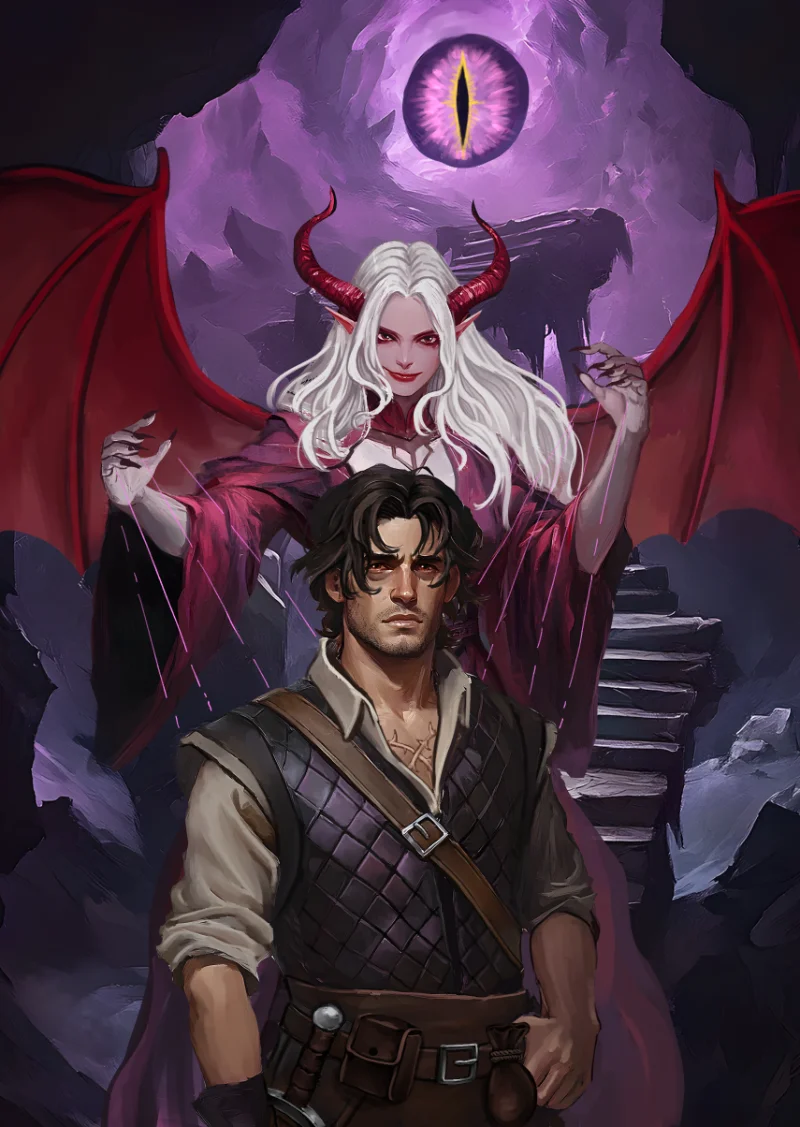
Submitted character story
Rhaeven Marric was born in Scornubel, beneath smoke-stained roofs and beside the brown waters of the Chionthar, where every coin had to pass through danger before it reached a purse. His mother sold dyed wool from Amn. His father hauled small luxuries by wagon along the Trade Way. Rhaeven inherited neither glory nor magic, only patience, caution, and the practical wisdom of a man who knew which bridges demanded bribes, which inns watered their ale, and which smiles hid knives.

He was never meant for legend.

For years, he worked the roads between Scornubel, Berdusk, Elturel, and the smaller settlements of the Heartlands. He was ordinary in the way useful men are ordinary: tired, careful, hard to fool, and slow to trust any offer that arrived too sweetly wrapped. He kept ledgers, remembered faces, and paid his guards on time. That was why Syrhaelle Nharovyn noticed him.

He first found her near the Reaching Woods after autumn rain had drowned the road in black mud. She lay beside a broken shrine, pale-haired and bloodied, claiming brigands had taken her escort. Rhaeven gave her water, wrapped her in his cloak, and brought her to a shrine-house of Ilmater.

She thanked him with red eyes and a smile that had ruined better men.

Rhaeven only bowed and returned to his wagons.

He had not resisted her from virtue. He had simply seen too many beautiful bargains end in debt.

Syrhaelle did not forget that. A succubus of rare pride, she had worn a hundred names in mortal courts and Lower Planar dens. Knights had broken vows for her. Priests had mistaken her whispers for revelation. Lords had emptied treasuries for one more dream of her touch. But Rhaeven Marric had given her a blanket, made certain she was safe, and walked away.

So she followed.

At first, she was only misfortune in a familiar shape. Men who tried to cheat him ruined themselves more thoroughly than chance should allow. Robbers woke blind and weeping blood. Strangers smiled at him too knowingly from rain-dark windows. In dreams, Syrhaelle did not offer pleasure, but questions.

Why spend your life guarding other men’s coin?
Why stay small when power is so easily taken?
Why pretend caution is the same as goodness?

Rhaeven gave her no answer, though the questions troubled him more than he admitted.

Then came the fallen star.

North of Berdusk, violet fire split the sky and struck the ruins of an old elven watchpost. By dawn, the land had changed. Trees leaned inward as if listening. Thornbushes opened wet, blinking eyes. Dead birds sang from the ditch in children’s voices. Rhaeven’s younger brother, Tavin, went searching for a missing wagon and returned alive but altered: his shadow moved against the sun, his breath steamed in warm air, and black rootlike veins crawled beneath his skin toward his heart.

The priests called it a planar sickness. They could ease his pain, but not save him.

On the third night, Syrhaelle came to Rhaeven in her true shape, horned and winged, terrible and beautiful as a blood-red hymn. She told him the fallen star had cracked an ancient binding beneath the ruins. Something hungry had stirred there, and though she could not destroy it alone, she could draw power from the wound it left in the world. Enough power, perhaps, to save Tavin.

Perhaps.

That word nearly made Rhaeven refuse.

Syrhaelle did not ask for his soul. That would have been easier. She asked for his shadow, his name freely spoken, and the right to answer whenever he called for power. His soul would remain his own, but every spell would pass through her. Every desperate plea would tighten the thread between them. Every victory won by her gift would give her another claim to stand beside him and whisper that she had been necessary.

And if he ever loved her willingly, the pact would cease to be a chain and become a crown.

Rhaeven signed because his brother was dying in the next room.

The ink was his blood. The parchment was his own shadow, peeled from the floor by Syrhaelle’s clawed hand. When he spoke her true name, she smiled as though she had waited centuries to hear it.

Tavin lived.

Not healed. Not wholly. But alive.

The black veins faded from his skin, leaving thin marks like old roots beneath the surface. His shadow still moves strangely in firelight. Some nights he wakes speaking words he does not understand. Rhaeven saved his brother, but he did not end what the fallen star began.

Now he walks the Star-Broken Road with violet fire in his palms and a fiend’s devotion coiled around his heart. Syrhaelle watches him through mirrors, goblets, dark windows, and the eyes of strangers who smile too long. She protects him with possessive tenderness, ruins enemies before he can forgive them, and calls him her stubborn merchant, her unwon king, her beloved mortal.

Rhaeven tells himself the pact was necessity, not surrender. Most days, he believes it.

He is still practical. Still cautious. Still more likely to count arrows, rations, and exits than speak of destiny. He dislikes waste, mistrusts easy miracles, and has a merchant’s habit of weighing every promise for hidden cost. Yet the pact has changed him. Power answers when he calls, and part of him hates how often power works.

He does not travel with companions because he trusts easily. He travels with them because alone, he would have only Syrhaelle’s voice for counsel. A party gives him witnesses. Contradiction. People to protect who are not debts in a ledger. People who might notice if his choices begin to sound too much like hers.

Rhaeven is not certain whether Syrhaelle wants to corrupt him, crown him, possess him, or be loved by him. The uncertainty is part of the trap. At times she is cruel. At times she is almost gentle. She knows where to press and when to retreat. She remembers every mercy he shows and asks why none of it is for her.

The fallen star still burns somewhere beneath the ruined watchpost. Tavin’s sickness is quiet, not cured. Syrhaelle’s true name is written nowhere except in Rhaeven’s memory. And every time he draws on her power, his shadow lingers a heartbeat behind him, as if reluctant to return.

When the night grows cold, she whispers from somewhere just out of sight:

“I did not steal you, Rhaeven. You opened the door.”

The worst part is not that she is right.

The worst part is that Rhaeven still has to decide what he will do with the door now that it stands open.