Portrait libraryBrennar Ashgale
Human / Cleric
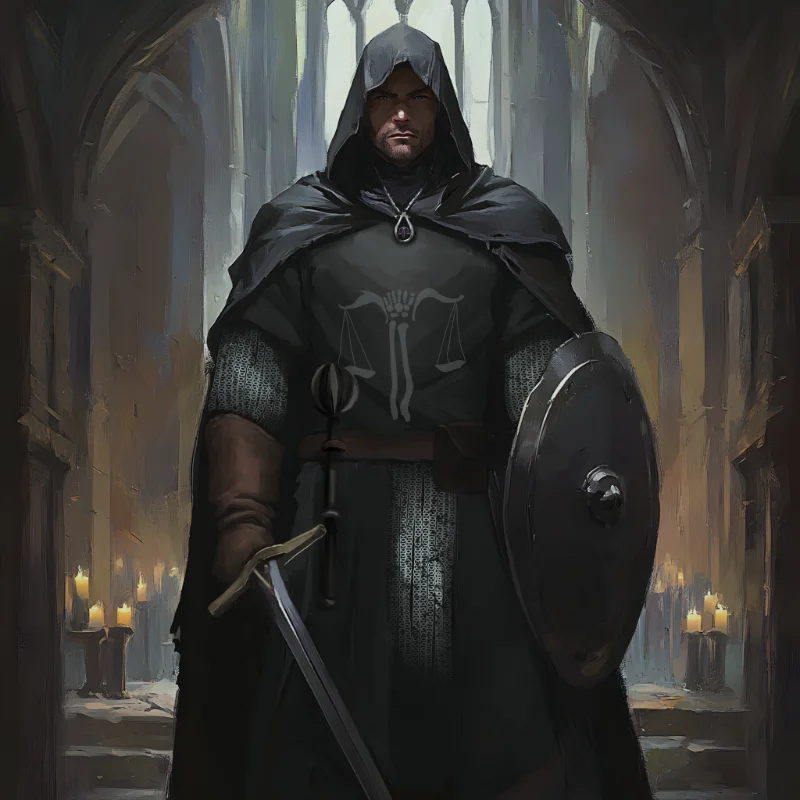
Submitted character story
Brennar Ashgale was once a simple man of Damara, a husband and father who knew death only as something that came for other households. He mended fences, split wood, carried water, argued over the price of grain, and prayed only when life pressed hard enough to make a man look upward. He believed the gods kept their distance from ordinary lives.

Then his daughter, Elowen, fell ill.

No priest could mend her. No offering moved the heavens. Brennar held her through the last cold hours before dawn, whispering stories she was too weak to answer. When she died, something in him did not break loudly. It simply went quiet.

He buried her himself beneath a black yew at the edge of the village graveyard.

He returned the next day.

And the next.

At first, he tended only Elowen’s grave. Then he began clearing weeds from the stones beside hers. Then he repaired broken markers, dug graves for the poor, washed the forgotten dead, and kept watch through the night when families were too afraid to stay. He did not call it faith. He would have found the word too clean. Grief made him a grave-keeper. Habit made him reliable. Duty made him something more.

In time, Brennar came to understand death not as cruelty, but as law. Every soul had a road to walk. Every life had a weight. Every grave deserved peace until Kelemvor’s judgment came. Yet he also learned that speaking of law to the grieving was rarely kind. Some mourners needed rites. Some needed silence. Some needed a hand on the shoulder and someone else to lift the shovel.

Brennar was good at that.

He was less good at living.

Years passed with him measuring his days by burials, lantern oil, and the slow weathering of names on stone. He did not abandon his wife, but sorrow made a distance between them neither knew how to cross. They spoke gently. They shared bread. They did not speak often of Elowen. Brennar told himself this was mercy, though some nights he wondered whether it was cowardice.

When the restless dead rose from an old barrow near his village, Brennar stood against them with a lantern in one hand and a blade in the other. He was no hero then, only a tired man who refused to let the dead be dragged from their rest. At dawn, a Doomguide of Kelemvor found him among the broken bones, laying each corpse back into the earth with reverence.

Asked why he showed mercy to the dead that had tried to kill him, Brennar answered, “Because no soul should be stolen from judgment.”

He took Kelemvor’s mantle soon after.

Not because grief had vanished. Not because faith made everything whole. He took it because the world was full of graves no one tended, names no one spoke, and dead things raised by fear, hunger, magic, or cruelty before their souls could pass cleanly onward.

Now Brennar Ashgale walks Faerûn as a gravewarden of the Lord of the Dead. He offers last rites to the dying, buries the nameless, and destroys the undead with quiet conviction. He does not fear death. He respects it. But he is still learning not to mistake respect for surrender, and not every living person who grieves is ready to hear that all things must end.

He is stern with necromancers, gentle with children, patient with the old, and awkward around joy. He keeps small toys and ribbons found near graves, not as trophies, but because he cannot bear to leave them in the mud. He dislikes needless cruelty, even toward monsters, yet he has little patience for those who twist death into a tool.

Brennar travels with companions because the dead are not the only ones who need guarding. Alone, he would follow every corpse, every rumor of undeath, every neglected grave until he forgot the living entirely. Others remind him to eat, to sleep, to laugh when laughter is not a sin, and to see people before they become names on stone.

Each dawn, he speaks Elowen’s name.

Each dusk, he lights his lantern and walks among the dead.

But somewhere between the graveyard and the road, Brennar has begun to understand that honoring death also means learning how to live before judgment comes.